How we stay global wind competitive on the energy market? An important component is the leadership in the production of small wind turbines – these are rated at 100 kilowatts or less.
In the past, the leading manufacturer of small wind turbines, was the United States contribute, stimulate economic growth and create jobs. U.S. small wind manufacturer report with 80-85 percent domestic content in their turbines and the small wind industry provides an estimated 1,600 American jobs. Still, in the increasingly competitive global wind market - our leadership in this area is long is not guaranteed.
Maintain its leading international position for United States manufacturer of small wind turbines, the Department of energy we invest in two projects, led by Maine in Pika energy and Oklahoma Bergey Windpower company - small wind turbine competitiveness improvement project. This initiative supports manufacturers in their efforts to reduce the cost of energy from small turbines by improving their components and upgrade their production processes. To read the full report, see the energy blog.
View the original article here
Showing posts with label small. Show all posts
Showing posts with label small. Show all posts
Tuesday, January 29, 2013
Competitive keep America: reduce the cost of small wind turbines
Tuesday, January 29, 2013Ярлыки: America, Competitive, Reduce, small, Turbines 0 коммент.


Tuesday, August 14, 2012
Los Angeles California incentive programs for small and large solar systems
Tuesday, August 14, 2012
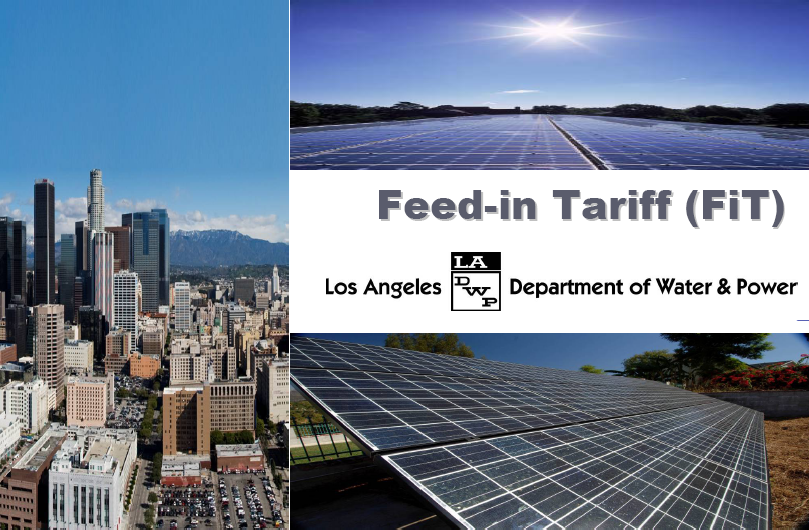
For those of you who may not know, has the Los Angeles Department of water and makes a solar developed incentive program (SIP) in support of solar energy in Los Angeles. This solar incentive program will help you with the cost of the installation of a new solar system. The solar feed-in tariff program that unused energy back, is allowed, that owners of large on grid-connected solar systems sell currently in work.

This solar incentive program was created to meet the goal of Senate Bill 1, essentially an extension of the California Solar Initiative (CSI) and the Energy Commission new solar homes partnership (NSHP). Basically, the aim of the program to promote the solar LADWP is customers to help achieve its energy goals California. By a financial incentive to homeowners, the grid-connected photovoltaic systems, install, LADWP homeowners invest in solar energy to promote hopes.
LADWP customers who have installed photovoltaic systems, can a lump sum in advance based on the expected performance of your new system receive. To an estimate to calculate the expected performance, Buydown (EPBB) based has the LADWP website an online calculator. This provides a sense of energy, annual kWh, CEC AC rating, design factor CSI evaluation and incentive amount. With this information can LADWP to find out, how much money of the customer to pay in advance.
There are benefits that go beyond this one-time payment. According to the LADWP website:
"Customers to qualify and a full installation equipped with a 'net meter'." "When produced a customer system solar more energy, as they use the excess energy as a credit on their Bill is calculated and backward their counters."
This means that if a LADWP customer system excess energy produced solar, it goes back into the grid. The timer is running backwards and LADWP is able to credit energy on their electric bills to their customers.
Conversely, LADWP is currently developing another system to promote the use of solar technology in the context of solar feed-in tariff programthe clean LA program. Although solar incentive program customers not for the clean LA program are qualified, designed this program mainly for larger commercial use.
Produced on this system feed-in tariff customers produce 30kW and later, to a contract for the sale of 100% of the energy in their establishment to LADWP to a fixed interest rate for up to twenty years.
Here a brief collection is on such as the previous function stages:
Application: To qualify for this program, applicants must go through a six-week process of application. Applicants can find the base price for the energy, proof of the site control, and full equipment and an online charts. You must also provide a 24-hour 12-month energy expected profile, required documentation, and numbers a registration fee depending on the scope of their project. For small systems, 30kW 150kW, the registration fee is $500. The registration fee is $1,000 for major projects between 151kW and 999kW.
Interconnection process: After the potential seller the application process is complete, they give an interconnection agreement, which includes an interconnection study fee of $750 for small projects or $1500 for large projects.
Forward with agreements:Then the applicant of a development of deposit of $50 per kW, interconnection costs 10% down payment, insurance forms, and L.A. City compliance with business forms. This is when the applicant signs the reference offer PPA. LADWP sets then the fixed rate contract, the price corresponding to the applicant previously was offered. The interconnection agreement and the PPA standard offer run at this point.
Progress, it is now the seller's purchase the necessary permits and follow through with the construction of their project.
Monthly payments: Once the project is completed, a reliable revenue is meters, provided that LADWP can calculate the monthly payments to the seller. The seller receives an invoice over the energy sent monthly payments by LADWP based on the amount of energy by the sales counter. These payments based on the sum of the system energy collected by the hour, which multiplied by every hour is determined by the base price for the energy and the time of delivery. This means that sellers get more money for energy during peak hours of the day.
It is important to note that a separate metering system account for the energy consumption of the seller's plant is installed. The power required, coming to the system from the network itself and not from the power produced locally because 100% is sold to LADWP.
It is the seller, its own system according to the contract and LADWP to offer a report every two years.
One thing solar incentive program and the feed-in tariff is on that they promote the development of clean, local energy.
If in Los Angeles thinking about getting started with solar energy, life, and you notice GoGreenSolar.com go.
By Thomas Jackson
View the original article here
This solar incentive program was created to meet the goal of Senate Bill 1, essentially an extension of the California Solar Initiative (CSI) and the Energy Commission new solar homes partnership (NSHP). Basically, the aim of the program to promote the solar LADWP is customers to help achieve its energy goals California. By a financial incentive to homeowners, the grid-connected photovoltaic systems, install, LADWP homeowners invest in solar energy to promote hopes.
LADWP customers who have installed photovoltaic systems, can a lump sum in advance based on the expected performance of your new system receive. To an estimate to calculate the expected performance, Buydown (EPBB) based has the LADWP website an online calculator. This provides a sense of energy, annual kWh, CEC AC rating, design factor CSI evaluation and incentive amount. With this information can LADWP to find out, how much money of the customer to pay in advance.
There are benefits that go beyond this one-time payment. According to the LADWP website:
"Customers to qualify and a full installation equipped with a 'net meter'." "When produced a customer system solar more energy, as they use the excess energy as a credit on their Bill is calculated and backward their counters."
This means that if a LADWP customer system excess energy produced solar, it goes back into the grid. The timer is running backwards and LADWP is able to credit energy on their electric bills to their customers.
Conversely, LADWP is currently developing another system to promote the use of solar technology in the context of solar feed-in tariff programthe clean LA program. Although solar incentive program customers not for the clean LA program are qualified, designed this program mainly for larger commercial use.
Produced on this system feed-in tariff customers produce 30kW and later, to a contract for the sale of 100% of the energy in their establishment to LADWP to a fixed interest rate for up to twenty years.
Here a brief collection is on such as the previous function stages:
Application: To qualify for this program, applicants must go through a six-week process of application. Applicants can find the base price for the energy, proof of the site control, and full equipment and an online charts. You must also provide a 24-hour 12-month energy expected profile, required documentation, and numbers a registration fee depending on the scope of their project. For small systems, 30kW 150kW, the registration fee is $500. The registration fee is $1,000 for major projects between 151kW and 999kW.
Interconnection process: After the potential seller the application process is complete, they give an interconnection agreement, which includes an interconnection study fee of $750 for small projects or $1500 for large projects.
Forward with agreements:Then the applicant of a development of deposit of $50 per kW, interconnection costs 10% down payment, insurance forms, and L.A. City compliance with business forms. This is when the applicant signs the reference offer PPA. LADWP sets then the fixed rate contract, the price corresponding to the applicant previously was offered. The interconnection agreement and the PPA standard offer run at this point.
Progress, it is now the seller's purchase the necessary permits and follow through with the construction of their project.
Monthly payments: Once the project is completed, a reliable revenue is meters, provided that LADWP can calculate the monthly payments to the seller. The seller receives an invoice over the energy sent monthly payments by LADWP based on the amount of energy by the sales counter. These payments based on the sum of the system energy collected by the hour, which multiplied by every hour is determined by the base price for the energy and the time of delivery. This means that sellers get more money for energy during peak hours of the day.
It is important to note that a separate metering system account for the energy consumption of the seller's plant is installed. The power required, coming to the system from the network itself and not from the power produced locally because 100% is sold to LADWP.
It is the seller, its own system according to the contract and LADWP to offer a report every two years.
One thing solar incentive program and the feed-in tariff is on that they promote the development of clean, local energy.
If in Los Angeles thinking about getting started with solar energy, life, and you notice GoGreenSolar.com go.
By Thomas Jackson
View the original article here
Ярлыки: Angeles, California, incentive, large, programs, small, solar, systems 0 коммент.
Tuesday, July 10, 2012
Department of Energy Announces $102 million for small business research
Tuesday, July 10, 2012
The Department of energy announced on June 27, it is to new funds for 104 small businesses nationwide. The grants amounting to more than $102 million, supported with the commercialization and job creation to develop a strong potential companies in 26 countries, companies, promising technologies help.
From the Department of energy small business innovation programs funded research (SBIR) and small business technology transfer (STTR), are the choices for phase II work. In phase II, are companies build on the conceptual work in phase I and track to take the next steps in the technologies to the market. The phase II Awards are up to 1 million $ for work for two years. The awards support developing technologies in areas of large wind turbines up to more energy-efficient data centers. For example, the Xunlight works 26 solar company of Toledo, Ohio, on transparent, flexible cadmium telluride modules for photovoltaic. See the DOE press release, the list of awards and the site SBIR and STTR.
View the original article here
From the Department of energy small business innovation programs funded research (SBIR) and small business technology transfer (STTR), are the choices for phase II work. In phase II, are companies build on the conceptual work in phase I and track to take the next steps in the technologies to the market. The phase II Awards are up to 1 million $ for work for two years. The awards support developing technologies in areas of large wind turbines up to more energy-efficient data centers. For example, the Xunlight works 26 solar company of Toledo, Ohio, on transparent, flexible cadmium telluride modules for photovoltaic. See the DOE press release, the list of awards and the site SBIR and STTR.
View the original article here
Ярлыки: announces, business, Department, Energy, million, research, small 0 коммент.
Sunday, June 10, 2012
Building a small solar-powered House on the Prairie: off-the-grid or grid tied?
Sunday, June 10, 2012
A year ago, Mike Larsen and Linda Nelson left their beloved urban Minneapolis home and moved to the prairie in southeast Minnesota near Altura to live in a way more connected to the land. In this story, Mike writes about how they came to the decision to build their off-the-grid home.
Off-grid or not off-grid—that is the question. Indeed, that was a HUGE question Locus architect Paul Neseth posed to Linda and I as we sat down to yet another design session. Like “paper or plastic,” but a lot lot harder.
We’d still be designing if not for our one guiding principle, the principle by which all our design decisions were judged. Though on paper, our house was turning out to be “green, sustainable, earth-hugged, solar powered, masonry heated, humanure composting, rainwater harvesting,” we never told Paul that’s what we wanted. Instead, we asked Paul to design us a house that does one thing for us—enables the Connection.
The Connection
First, connect us to the Land, our 62 beloved ridge-top acres overlooking Whitewater State Park. Second, connect us to our friends, family, neighbors and community. Third—if we dare admit such a wild proclivity—connect us to the Divine, the great mystery that flows through and binds all of these. That’s it Paul, just this little Connection; can you do that for us? Can any house do that for us? It is, after all, just a house.
Now, one month after moving into the house, it’s too early to say we did it. But, thanks to Paul, at least we attempted it, one decision at a time. And no decision was tougher than off-grid versus grid-tie (or not off-grid).
Grid-tied versus Off-the-grid
There was never any debate about solar electric. After all, what could connect us more to the Land than harvesting sunlight to produce electricity, not unlike the Indian grass on our 40 acres of newly planted prairie. The only debate was storage. Where do we store excess electricity so we can still “plug-in” when the sun isn’t shining?
There are definitely upsides to a grid-tied home—and we almost went that direction. By storing excess electricity on the grid, a grid-tied system would directly connect us to our neighbors and community. We’d become one of their electricity suppliers, potentially (and perhaps sneakily) reducing their reliance on fossil-fuel generated power. We’d also earn income by selling power to the electric company, hopefully offsetting the cost of power we purchased from the grid when the sun isn’t shining. And lower total cost means less hours employed means more time on the Land.
But for many reasons, we decided to go off the grid. Our first (and most valuable) step in going off-grid was touring four homes. By generously opening their off-grid homes to us, these pioneers gave us our first big “Aha!” There are as many good ways to go off-grid as there are good reasons to do it. And beyond all the good reasons for a grid-tied system, we discovered what draws some to off-grid. We knew about independence and self-reliance. But tinkerer? One guy had so much excess electricity that he not only drove an electric tractor, but he gutted a Jaguar to build his own electric car. Another recovered methane from cows to power his generator.
While we saw (and found online) much useful how-to information on batteries (for storing the electricity), charge controllers (for charging the batteries) and backup generators (for when the batteries get low), we didn’t anticipate the big problem—lack of local off-grid solar installers. Many installers do grid-tie. But few, we painfully discovered, have experience installing off-grid electric.
Powered by the Sun
So when we hired Curt Shellum of Solar Connection, we knew (because he was so forthcoming) we were buying his grid-tie skills and hoping that he’d close the gap to off-grid. And he did: He installed 12 ground-mount photovoltaic panels producing 2.9kW max, 16 batteries designed to store 4 days of typical electricity usage, 1 invertor for charging batteries (from solar panels or generator), inverting battery DC to usable AC and displaying performance (red means I better start the generator) and 1 generator (powered by our tractor’s PTO).
And the results never cease to amaze me. Since coming on line, our off-grid system has powered the remainder of the construction project: 3 inch drills, miter saw and attached vacuum, and fans blowing all night to dry the sheetrock mud. And now that we’ve moved into our home, the system has done all we need powering lights, 5 pumps, 2 fridges, freezer, computer, and phone. I was so relieved when I heard the roaring whir of the Vita-mix blender as it turned frozen strawberries into summer-tasting smoothies. Only once in 4 months, fearing the battery charge level would drop below the 50% spec. limit, did I start the backup generator. And it turned out I didn’t need to—the next day was plenty sunny.
The Off-grid Journey
And what of our highest value—the ultimate purpose for our house—the Connection? Today is the seventh consecutive day of low-slung clouds and gully-ripping rain. The batteries remain 82% charged. At 11am the solar panels are producing zero watts of electricity. Nothing. So I feel a little anxious. Will my batteries get overly-depleted? Will I need to hook up the generator? And this slight anxiety—or better put: this heightened awareness of real solar energy—connects me to the Land in a way I never knew possible. I feel perhaps like the summer-loving Indian grass. “Where’s the sun?” And when, indeed, the sun’s rays finally strike the PV, replenishing the batteries, powering our house and our lives, I too feel replenished.
I need to make a confession about our brief grid-tie experience. The moment we started exploring grid-tie, we started designing our house differently, to suck more juice. Bigger fridge? Why not? The grid is always there. The moment we went back to the off-grid, the big fridge disappeared. So did any light that is not LED. Off-grid drove a behavior change for us that grid-tie never induced. And I liked the change.
Unlike the steady, always-as-much-as-we-want grid-tied system, off-grid follows the cycle of abundance and scarcity. This cycle connects me to the Land because it’s how I’m coming to perceive the Land: life, death and life-renewed. Lately, as I watch the dance of the wind-whipped grass, I’ve even thought of adding a small wind turbine. Yes, it will help keep the batteries full. Better yet, perhaps I’ll learn to feel more thrilled as the wind stings my face. Who knows what we’ll do? Off-grid isn’t a destination. Off-grid is a journey.
What do you think about grid-tied versus off-the grid homes? Let us know in the comments!
You can follow all of Mike and Linda’s adventures in sustainable living and the house the land built at Mike’s blog, Rah-dur. This was originally posted on the MN Energy Stories blog from the Clean Energy Resource Teams.
View the original article here
Off-grid or not off-grid—that is the question. Indeed, that was a HUGE question Locus architect Paul Neseth posed to Linda and I as we sat down to yet another design session. Like “paper or plastic,” but a lot lot harder.
We’d still be designing if not for our one guiding principle, the principle by which all our design decisions were judged. Though on paper, our house was turning out to be “green, sustainable, earth-hugged, solar powered, masonry heated, humanure composting, rainwater harvesting,” we never told Paul that’s what we wanted. Instead, we asked Paul to design us a house that does one thing for us—enables the Connection.
The Connection
First, connect us to the Land, our 62 beloved ridge-top acres overlooking Whitewater State Park. Second, connect us to our friends, family, neighbors and community. Third—if we dare admit such a wild proclivity—connect us to the Divine, the great mystery that flows through and binds all of these. That’s it Paul, just this little Connection; can you do that for us? Can any house do that for us? It is, after all, just a house.
Now, one month after moving into the house, it’s too early to say we did it. But, thanks to Paul, at least we attempted it, one decision at a time. And no decision was tougher than off-grid versus grid-tie (or not off-grid).
Grid-tied versus Off-the-grid
There was never any debate about solar electric. After all, what could connect us more to the Land than harvesting sunlight to produce electricity, not unlike the Indian grass on our 40 acres of newly planted prairie. The only debate was storage. Where do we store excess electricity so we can still “plug-in” when the sun isn’t shining?
There are definitely upsides to a grid-tied home—and we almost went that direction. By storing excess electricity on the grid, a grid-tied system would directly connect us to our neighbors and community. We’d become one of their electricity suppliers, potentially (and perhaps sneakily) reducing their reliance on fossil-fuel generated power. We’d also earn income by selling power to the electric company, hopefully offsetting the cost of power we purchased from the grid when the sun isn’t shining. And lower total cost means less hours employed means more time on the Land.
But for many reasons, we decided to go off the grid. Our first (and most valuable) step in going off-grid was touring four homes. By generously opening their off-grid homes to us, these pioneers gave us our first big “Aha!” There are as many good ways to go off-grid as there are good reasons to do it. And beyond all the good reasons for a grid-tied system, we discovered what draws some to off-grid. We knew about independence and self-reliance. But tinkerer? One guy had so much excess electricity that he not only drove an electric tractor, but he gutted a Jaguar to build his own electric car. Another recovered methane from cows to power his generator.
While we saw (and found online) much useful how-to information on batteries (for storing the electricity), charge controllers (for charging the batteries) and backup generators (for when the batteries get low), we didn’t anticipate the big problem—lack of local off-grid solar installers. Many installers do grid-tie. But few, we painfully discovered, have experience installing off-grid electric.
Powered by the Sun
So when we hired Curt Shellum of Solar Connection, we knew (because he was so forthcoming) we were buying his grid-tie skills and hoping that he’d close the gap to off-grid. And he did: He installed 12 ground-mount photovoltaic panels producing 2.9kW max, 16 batteries designed to store 4 days of typical electricity usage, 1 invertor for charging batteries (from solar panels or generator), inverting battery DC to usable AC and displaying performance (red means I better start the generator) and 1 generator (powered by our tractor’s PTO).
And the results never cease to amaze me. Since coming on line, our off-grid system has powered the remainder of the construction project: 3 inch drills, miter saw and attached vacuum, and fans blowing all night to dry the sheetrock mud. And now that we’ve moved into our home, the system has done all we need powering lights, 5 pumps, 2 fridges, freezer, computer, and phone. I was so relieved when I heard the roaring whir of the Vita-mix blender as it turned frozen strawberries into summer-tasting smoothies. Only once in 4 months, fearing the battery charge level would drop below the 50% spec. limit, did I start the backup generator. And it turned out I didn’t need to—the next day was plenty sunny.
The Off-grid Journey
And what of our highest value—the ultimate purpose for our house—the Connection? Today is the seventh consecutive day of low-slung clouds and gully-ripping rain. The batteries remain 82% charged. At 11am the solar panels are producing zero watts of electricity. Nothing. So I feel a little anxious. Will my batteries get overly-depleted? Will I need to hook up the generator? And this slight anxiety—or better put: this heightened awareness of real solar energy—connects me to the Land in a way I never knew possible. I feel perhaps like the summer-loving Indian grass. “Where’s the sun?” And when, indeed, the sun’s rays finally strike the PV, replenishing the batteries, powering our house and our lives, I too feel replenished.
I need to make a confession about our brief grid-tie experience. The moment we started exploring grid-tie, we started designing our house differently, to suck more juice. Bigger fridge? Why not? The grid is always there. The moment we went back to the off-grid, the big fridge disappeared. So did any light that is not LED. Off-grid drove a behavior change for us that grid-tie never induced. And I liked the change.
Unlike the steady, always-as-much-as-we-want grid-tied system, off-grid follows the cycle of abundance and scarcity. This cycle connects me to the Land because it’s how I’m coming to perceive the Land: life, death and life-renewed. Lately, as I watch the dance of the wind-whipped grass, I’ve even thought of adding a small wind turbine. Yes, it will help keep the batteries full. Better yet, perhaps I’ll learn to feel more thrilled as the wind stings my face. Who knows what we’ll do? Off-grid isn’t a destination. Off-grid is a journey.
What do you think about grid-tied versus off-the grid homes? Let us know in the comments!
You can follow all of Mike and Linda’s adventures in sustainable living and the house the land built at Mike’s blog, Rah-dur. This was originally posted on the MN Energy Stories blog from the Clean Energy Resource Teams.
View the original article here
Ярлыки: building, House, offthegrid, Prairie, small, solarpowered 0 коммент.
Saturday, June 02, 2012
Energy Department Awards $11 Million for Clean Energy Small Businesses
Saturday, June 02, 2012
The Energy Department announced on May 23 a total of $11 million in innovative research and technology grants of up to $150,000 awarded to nearly 67 small businesses in 22 states. The grants were awarded under the department's Small Business Innovation Research program, part of the Obama Administration’s broader support for job-creating small businesses and startup companies nationwide. These businesses are located in Alabama, Arizona, Arkansas, California, Colorado, Florida, Georgia, Illinois, Maryland, Massachusetts, Michigan, Mississippi, New Jersey, New Mexico, New York, Ohio, Pennsylvania, Tennessee, Texas, Vermont, Virginia, and Washington. The businesses will work on 75 research projects including designing better wind turbines and fuel cell technology. They will then be eligible to compete for a second phase of the program with awards up to $1 million over two years.
For example, the Seachange Group in Maine will work on a process that determines the best conditions for thermochemical conversion of biomass into drop-in transportation fuels, which has potential for under-developed rural communities. And Creare Incorporated of New Hampshire will focus on improving battery pack thermal management for electric vehicles. See the DOE press release and the description of all the projects.
View the original article here
For example, the Seachange Group in Maine will work on a process that determines the best conditions for thermochemical conversion of biomass into drop-in transportation fuels, which has potential for under-developed rural communities. And Creare Incorporated of New Hampshire will focus on improving battery pack thermal management for electric vehicles. See the DOE press release and the description of all the projects.
View the original article here
Ярлыки: Awards, Businesses, Clean, Department, Energy, million, small 0 коммент.
Tuesday, May 01, 2012
Department of energy announces funding for small business efficiency and renewable research
Tuesday, May 01, 2012The Energy Department on 9 April announced that up to $9 million this year to about 50 small business innovative energy efficiency and renewable energy fund to advance. This initiative helps companies with promising ideas, which cut improvement of manufacturing processes, building efficiency increase, oil dependency, and electricity from renewable energy sources to generate.
DOE's Office of energy efficiency and renewable energy (EERE) provides funding through the Department of small business innovation research and small business technology transfer programs. These allow federal agencies with large budgets for research and development at a fraction of their funding for competitions between small business aside. Small businesses win awards in these programs to develop the rights to all technologies and they are prompted to market them.
Call this wide-ranging topic of research are small businesses broadly framed to work problems and achieving goals, and gives them the freedom to renew. It promotes even small companies with groundbreaking concepts for a part of research teams, the EERE programs. The possibility of financing includes 8 width themes and sub-themes 30 areas including advanced manufacturing, energy-efficient buildings, biomass, hydrogen and fuel cells and solar energy, wind and water power technologies. The Department of energy funded are selected small businesses with one year, awards of up to $150.000. Prize winner with successful projects have the option to compete for more than $1 million in follow-on funding. See the EERE progress alert and the application for the funding opportunity announcement for the funding opportunity Exchange Web site.
Ярлыки: announces, business, Department, efficiency, Energy, Funding, renewable, research, small 0 коммент.
Subscribe to:
Posts (Atom)